Back to Mobility
Global Automated Guided Vehicle (AGV) Market
Published Date : February 11, 2026 Category: Mobility
Published Date : February 11, 2026 Category: Mobility
Market Pulse: Global Automated Guided Vehicle Industry
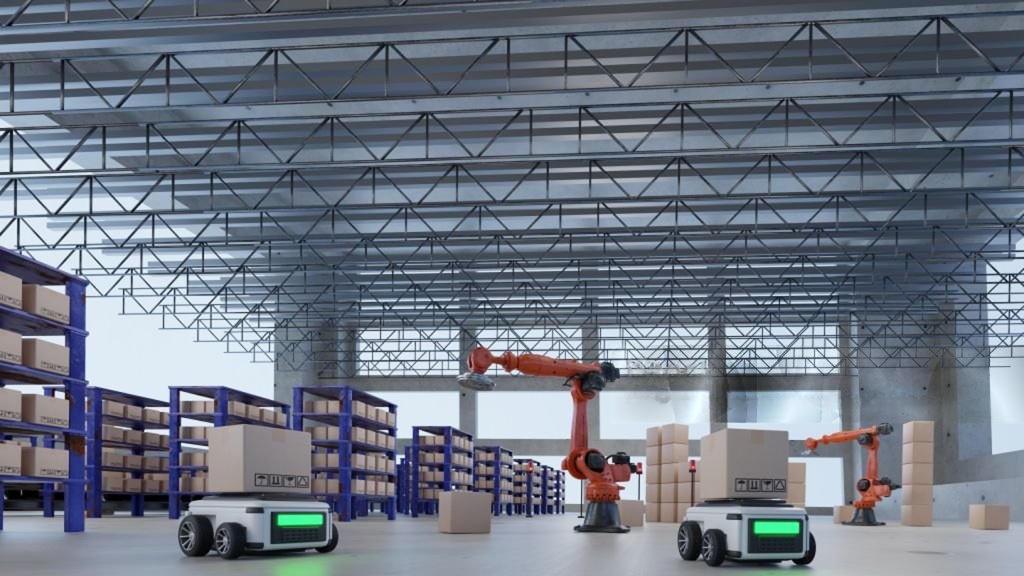
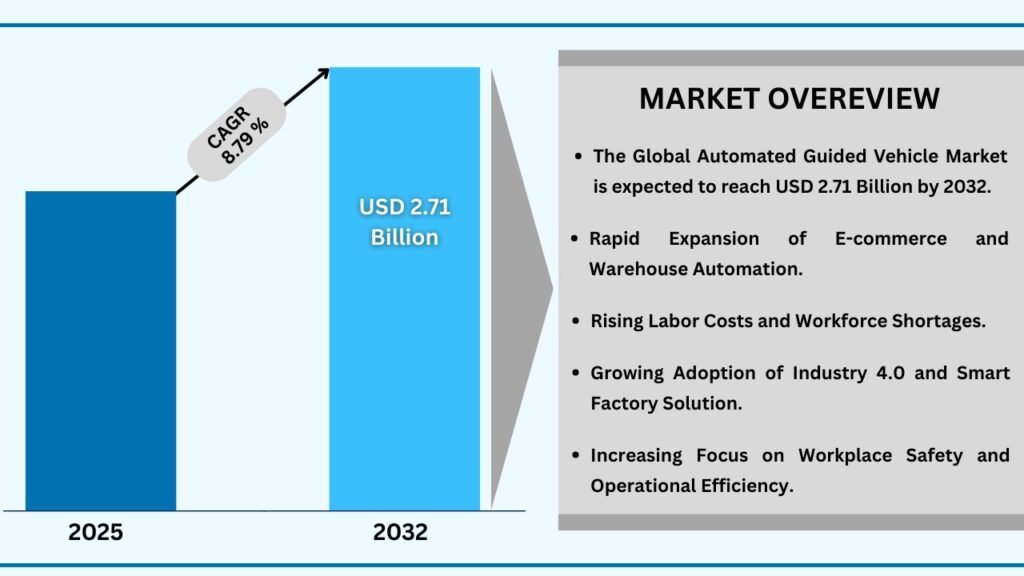
The global Automated Guided Vehicle (AGV) market is witnessing robust growth as industries increasingly automate material handling and intralogistics operations. As supply chains become more complex and customer expectations for speed and accuracy rise, businesses are turning to AGVs to streamline warehouse, manufacturing, and distribution activities. These driverless vehicles, capable of transporting materials without human intervention, are becoming a cornerstone of smart factories and next-generation logistics centers.
The rapid expansion of e-commerce, just-in-time manufacturing, and omnichannel retail models is accelerating the need for efficient, reliable, and scalable material movement solutions. AGVs help organizations reduce labor dependency, minimize errors, and maintain consistent throughput in high-volume environments. With labor shortages and rising wages affecting many regions, automation through AGVs is increasingly viewed not just as an efficiency upgrade but as a strategic necessity.
Technological progress is also reshaping the AGV landscape. Modern AGVs are equipped with advanced navigation systems such as LiDAR, vision guidance, natural feature navigation, and AI-based route optimization. Integration with warehouse management systems (WMS), manufacturing execution systems (MES), and enterprise resource planning (ERP) platforms allows seamless coordination between vehicles and broader operational workflows. As a result, AGVs are evolving from simple transport units into intelligent, connected assets within digital supply chain ecosystems.
Market Definition
The Global Automated Guided Vehicle (AGV) Market refers to the industry centered on the design, manufacturing, software development, integration, and deployment of driverless vehicles used for material transport within controlled environments. AGVs operate without onboard human drivers and follow predefined or dynamically generated paths using sensors, markers, lasers, or cameras.
These vehicles are used to move raw materials, work-in-progress inventory, and finished goods across facilities such as warehouses, factories, hospitals, airports, and distribution centers. Common AGV types include tow vehicles, unit load carriers, pallet trucks, forklift AGVs, and assembly line vehicles.
AGVs play a critical role in modern intralogistics by improving operational efficiency, reducing manual handling, enhancing safety, and enabling 24/7 operations. They are a key component of Industry 4.0 and smart warehouse strategies, where connectivity, data exchange, and automation drive productivity gains.
Industry Scope Explained
The AGV market spans hardware, software, and services associated with automated material transport. On the hardware side, it includes the vehicles themselves, sensors, batteries, safety systems, and navigation components. The software layer covers fleet management systems, traffic control software, simulation tools, and integration platforms that coordinate AGV operations within facilities.
Services form a significant part of the ecosystem, including system design, customization, installation, consulting, maintenance, and after-sales support. Many vendors now offer end-to-end solutions that combine vehicles, software, and lifecycle services into a single package.
AGVs are widely deployed across industries such as automotive, e-commerce, food & beverage, pharmaceuticals, electronics, chemicals, and healthcare. In manufacturing, they support line-side delivery and work-in-progress movement. In warehouses, they handle pallet transport, order fulfillment, and replenishment tasks. In hospitals, AGVs are used for transporting linens, medicines, and meals, improving operational efficiency and hygiene.
The market also increasingly overlaps with Autonomous Mobile Robots (AMRs). While AGVs traditionally follow fixed routes, newer systems incorporate more autonomous capabilities, blurring the line between AGVs and AMRs. This convergence is expanding the scope and application potential of automated vehicles.
Key Advantages of AGV Systems
Operational Efficiency and Throughput
AGVs significantly improve operational efficiency by providing consistent and predictable material movement. Unlike manual transport, which can be subject to variability and human error, AGVs operate according to programmed logic and schedules. This consistency helps optimize workflows, reduce bottlenecks, and maintain steady throughput.
By automating repetitive transport tasks, businesses can reallocate human labor to higher-value activities such as quality control, planning, and customer service. AGVs can also operate continuously, including during night shifts and low-light conditions, supporting round-the-clock productivity. In high-volume environments, this capability translates into faster order processing and improved service levels.
Enhanced Workplace Safety
Safety is a major driver of AGV adoption. Modern AGVs are equipped with obstacle detection sensors, emergency stop mechanisms, speed control, and collision avoidance systems. These features help reduce the likelihood of accidents involving people, equipment, or inventory.
In environments where forklifts and manual pallet trucks traditionally dominate, AGVs can lower incident rates by minimizing human-operated vehicle traffic. Controlled and predictable movement patterns also contribute to safer facility layouts. For organizations focused on regulatory compliance and employee well-being, AGVs represent a proactive safety investment.
Cost Optimization Over Time
Although AGVs require upfront investment, they often deliver long-term cost benefits. Reduced labor costs, lower error rates, less product damage, and optimized energy usage contribute to favorable total cost of ownership (TCO). Electric-powered AGVs also have lower fuel and maintenance costs compared to internal combustion equipment.
Predictive maintenance capabilities further enhance cost efficiency. By monitoring vehicle health and component performance, companies can address issues before they lead to downtime. Over time, these efficiencies can offset initial capital expenditure and generate strong returns on investment.
Scalability and Flexibility
Modern AGV systems are increasingly modular and scalable. Businesses can start with a small fleet and expand as demand grows. Software-driven fleet management allows easy reconfiguration of routes and priorities, enabling facilities to adapt to layout changes or evolving operational needs.
This flexibility is particularly valuable in dynamic industries like e-commerce, where demand patterns fluctuate seasonally. Scalable AGV deployments allow companies to align automation investments with business growth.
Market Barriers and Industry Constraints
High Initial Investment
One of the primary barriers to AGV adoption is the initial capital requirement. Costs include vehicles, navigation infrastructure, software, system integration, and facility modifications. For small and medium-sized enterprises, these investments can be substantial.
While long-term benefits may justify the cost, budget constraints and uncertain ROI timelines can delay decision-making. Financial models such as leasing and robotics-as-a-service (RaaS) are emerging to address this challenge, but adoption varies by region and industry.
Integration Complexity
Implementing AGVs is not just a hardware purchase; it requires integration with existing systems and workflows. Aligning AGVs with WMS, MES, and ERP platforms can be technically complex. Facility layout changes, staff training, and process redesign may also be necessary.
Poorly planned deployments can lead to underutilization or operational disruptions. As a result, successful AGV projects often depend on strong system integration expertise and change management.
Regional Dynamics: North America, Europe, and Asia-Pacific
North America is a major AGV market, supported by advanced warehousing infrastructure, strong e-commerce growth, and early adoption of automation technologies. The presence of large retailers, 3PL providers, and technology-driven manufacturers fuels demand. Labor shortages and high labor costs further encourage automation investments.
Europe is another key region, driven by Industry 4.0 initiatives, strict safety standards, and a strong manufacturing base. Countries such as Germany, Sweden, and the Netherlands are known for early adoption of industrial automation and intralogistics innovation.
Asia-Pacific is the fastest-growing region in the AGV market. Rapid industrialization, expanding manufacturing sectors, and booming e-commerce in China, India, Japan, and Southeast Asia are major growth drivers. Government support for smart manufacturing and domestic robotics industries also contributes to market expansion.
Competitive Environment and Key Participants
The AGV market is highly competitive and innovation-driven. Companies compete on navigation technology, software intelligence, system reliability, and service capabilities. Key participants include:
Investments in warehouse automation and smart factories are fueling AGV demand. Venture capital and corporate investments in robotics startups are accelerating innovation. Partnerships between AGV vendors, logistics providers, and software firms are enabling integrated automation ecosystems.
Robotics-as-a-service models are gaining traction, allowing companies to adopt AGVs with lower upfront costs and subscription-based pricing. This approach reduces financial risk and makes automation accessible to a broader range of businesses.
Future Market Direction
The future of the AGV market lies in greater autonomy, intelligence, and connectivity. AI-powered navigation, swarm intelligence, and real-time optimization will make fleets more adaptive. Integration with digital twins and simulation tools will enable better planning and performance analysis.
Sustainability will also shape the market. Energy-efficient designs, advanced batteries, and optimized routing will help reduce environmental impact. As companies pursue greener operations, electric automated vehicles will align well with sustainability goals.
Convergence between AGVs and AMRs is expected to continue, leading to more versatile and user-friendly systems. As technology matures and costs decline, adoption will likely expand beyond large enterprises to mid-sized facilities.
Conclusion
The global AGV market is transforming material handling through automation, intelligence, and connectivity. As supply chains demand greater speed, accuracy, and resilience, AGVs are becoming essential infrastructure in warehouses and factories.
Organizations that invest in well-planned AGV deployments can achieve gains in productivity, safety, and cost efficiency. While challenges such as high initial investment and integration complexity remain, evolving business models and technological advances are making AGVs more accessible.
In the long term, AGVs will play a central role in smart logistics and Industry 4.0 environments. Companies that align automation strategies with operational goals and digital transformation initiatives will be best positioned to capture the value of this growing market.
At Advantia Business Consulting, we help manufacturers, logistics providers, and technology vendors navigate the rapidly evolving AGV and warehouse automation landscape. Through in-depth market intelligence, automation strategy advisory, and competitive analysis, we support clients in evaluating AGV adoption, optimizing intralogistics investments, and scaling smart automation initiatives. Partner with Advantia Business Consulting to unlock efficiency, resilience, and long-term value across your automated material handling operations.